Prime Minister Briefing with Diplomatic Corps on Government Restructuring
Intervention by Ms. Pauline Tamesis - UN Resident Coordinator in Viet Nam

Excellency Prime Minister,
The United Nations commends Viet Nam’s strong political will to organize its state apparatus towards a more efficient, transparent, and people centered system. The restructuring reflects a long-term vision aligned with the goals of modernization, digital governance, and public sector integrity. Consolidating ministries clarifies responsibilities and reduces duplication, while subnational restructuring creates a leaner, more cost-effective system and strengthens regional connectivity for more balanced growth.
Viet Nam’s administrative reorganization also presents challenges, as reforms often disrupt existing personnel structures, institutional cultures, and long-standing practices, leading to delays in service delivery to beneficiaries and possible reluctance to adopt new approaches or embrace innovation.
It is essential for any reform to be people-centered, inclusive and leave no one behind. Allow me to highlight a few points for consideration:
First, on-going reforms must improve citizen-centric governance and maintain focus on equity in service delivery.
Efficiency must deliver for the people and ensure benefits reach everyone, especially those most often left behind: people with disabilities, women, children, ethnic minorities, the elderly, migrants, and the poor. Data from the Provincial Governance and Public Administration Performance Index (or PAPI) shows that these groups often report less positive experiences with local governance.
With the reforms, we see a concrete opportunity in bringing services closer to people. A stronger, more empowered commune level could improve both speed and equity in delivery. But to succeed, local governments need clear mandates, adequate resources, and the right capacities.
Second, unlock digital transformation and modernize public management
Digital transformation gives Viet Nam a real opportunity—not just to modernize public services, but also to make them more responsive and inclusive. Reforms offer opportunities to strengthen civil registration and vital statistics to ensure that everyone counts.
At the same time, reforms can help Viet Nam attract and retain talent, especially by creating space for women and young leaders to thrive. This is essential for building a strong, future-ready state.
However, rapid digitalization also comes with risks as we have seen with rise of online scams and cyber bullying – requiring stronger protections for children and vulnerable groups.
Third, enable a modern, skilled, inclusive workforce
This is a moment to invest in people—skills, productivity, and decent jobs. Viet Nam has an opportunity to foster higher-value, greener, and more inclusive growth—including by boosting women’s leadership and creating enabling environments for young talent.
Fresh perspectives can best prepare Viet Nam for its demographic shifts and build the foundation for a modern care economy that can meet the needs of an ageing population.
Fourth, protect essential services during the transition
While restructuring is ongoing, we must guard against disruption to essential services -- especially at subnational level. Local governments are now the primary interface for citizens in accessing health, education, child protection, and social welfare services. Newly empowered “super communes” need to manage services for significantly larger populations with limited capacity to fulfill their expanded mandates.
The UN strongly supports Viet Nam’s ambition of free essential healthcare by 2035, but during transition, things such as procurement of medicines and supplies must remain uninterrupted.
Fifth, guard against unintended risks
The consolidation of ministries brings clarity but may also risk diminished attention to critical social and environmental issues. For example, cross-sectoral mandates such as gender equality, disability inclusion and child protection must not lose attention nor funding. Similarly, social and environmental protection must remain cross-cutting policy priorities. And we must anticipate that changes may slow decision-making, including for ODA processes. These risks must be actively managed.
To do so, it helps to have clear legal frameworks, strong inter-agency coordination and sustained investments in local capacity building. Transparency and citizen participation are equally important to mitigate risks and ensure effective implementation.
The UN on its 80th anniversary can learn a lot from Viet Nam’s comprehensive reforms. It is in this spirit that I reaffirm the UN’s commitment to accompany you in this journey—in line with our shared aspirations to achieve the SDGs.
Viet Nam’s bold reforms pave the way for a more responsive, equitable, and resilient government—ready to meet the needs of all people, now and into the future. Thank you. Xin cảm ơn.



Speech by
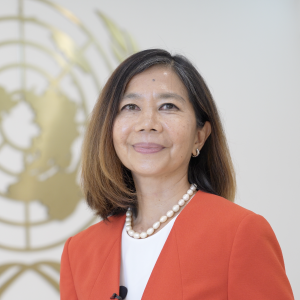
Pauline Tamesis
Goals we are supporting through this initiative